

Mastering the Padel Court: A Complete Guide to Every Shot and Strategy
Padel has taken the sports world by storm, and for good reason. It’s fast, social, and surprisingly easy to pick up, yet it offers endless depth for those who want to improve. Whether you’re stepping onto the court for the first time or you’ve been playing for years, understanding the nuances of positioning, shot selection, and tactical play can transform your game. This guide breaks down everything you need to know, from the basic rules to advanced strategies, helping you make the most of your time on the padel court. If you’re looking for a structured way to elevate your skills, consider joining a / Keyword experience that combines expert coaching with the beautiful backdrop of Mallorca.
Padel is often described as a mix between tennis and squash, but it has its own unique identity. Played in doubles on an enclosed court roughly a third the size of a tennis court, the walls become part of the game. This means rallies are longer, reflexes are sharper, and strategy matters more than raw power. For players who love a mental challenge, padel is addictive. In this article, we’ll explore the essential shots, the importance of teamwork, and how to approach training so you can see real progress every time you play.
Understanding the Padel Court: Dimensions and Key Zones
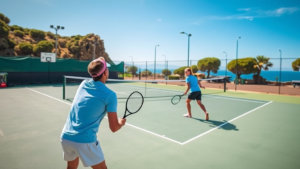
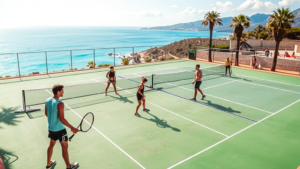
Before you can master the game, you need to know the battlefield. A padel court is 20 meters long and 10 meters wide, divided by a net in the middle. The service line is 3 meters from the back wall, and there are service boxes similar to tennis. However, the most distinctive feature is the walls: the back wall is solid, with a glass upper section, and the side walls are also playable. This means the ball can rebound off the walls, adding a whole new layer of strategy.
Key zones on the court include the baseline, the transition area, and the net zone. The net zone is where most points are won, as a well-placed volley or a smash (called a ‘bandeja’ or ‘vibora’) can be nearly impossible to return. The baseline is where you’ll start most rallies, and the transition area is where you’ll move forward or backward depending on the situation. Understanding these zones helps you position yourself correctly and anticipate your opponent’s next move.
For those serious about improving, spending time on a court with proper markings and quality surfaces is crucial. Many players find that training at a dedicated facility, such as those featured in padel camps, accelerates their learning because they can practice specific drills and receive immediate feedback from experienced coaches.
Essential Shots Every Player Must Master
Padel has a rich vocabulary of shots, each with a specific purpose. Here are the five most important ones you should work on:
- Serve: Unlike tennis, the serve is underhand in padel. The ball must bounce once before you hit it, and you must aim for the service box diagonally opposite. Placement is key – a good serve can set you up for a strong return.
- Return of serve: The return is often the most important shot in the rally. You should aim to hit the ball low and deep, forcing your opponents to move back and defend. A solid return can neutralize their advantage.
- Volley: When you’re at the net, the volley is your best friend. Keep your wrist firm, use a short backswing, and direct the ball into the open court. Volleys are about control and placement, not power.
- Bandeja: This is a smash hit with a slight slice, usually from above the shoulder. It’s used to keep the ball low and force your opponents to hit up, giving you the chance to stay on the offensive.
- Vibora: A more aggressive version of the bandeja, the vibora is hit with more power and spin, making it dip sharply. It’s a great weapon when you’re at the net and want to end the point.
Mastering these shots takes time and repetition. That’s why structured training, like the kind offered at a professional padel camp, can be so effective. You’ll get to practice these shots in a focused environment, with drills designed to build muscle memory and improve your technique.
The Art of Positioning and Movement
In padel, where you stand is almost as important as how you hit the ball. The ideal position is called ‘the net,’ where you and your partner stand close to the net, ready to intercept any weak shot. This aggressive position forces your opponents to hit difficult passing shots or lobs, and it gives you the chance to win the point with a well-placed volley.
However, you can’t always be at the net. If you’re forced back to the baseline, you need to work on your defensive lobs and your ability to reset the point. The key is to recognize when to move forward and when to retreat. A common rule is: if you hit a deep, low shot, you can move forward; if you hit a high, defensive lob, you should move back to cover the middle.
Movement in padel is all about small, explosive steps. You rarely run long distances; instead, you shuffle and pivot to stay balanced and ready. Practicing footwork drills, like the ‘split step’ before your opponent hits the ball, can dramatically improve your reaction time. Many players overlook this aspect, but it’s often the difference between being a good player and a great one.
Tactical Play: How to Outsmart Your Opponents
Padel is a game of chess, not checkers. The best players are constantly thinking two or three shots ahead. One of the most effective tactics is to target the weaker player on the opposing team. This doesn’t mean being rude; it means hitting the ball consistently to their side, forcing them to make errors. Another tactic is to use the walls to your advantage. A ball that bounces off the side wall can be very difficult to return, especially if you hit it with spin.
Communication with your partner is also vital. You should always call ‘mine’ or ‘yours’ to avoid confusion, and you should have a plan for who takes the middle balls. In doubles, the middle is the most vulnerable area, so you need to cover it well. Some teams use a ‘left-right’ formation, where each player covers one side of the court, while others prefer a ‘parallel’ formation, where both players are at the net. The best teams are flexible and adapt their formation based on the situation.
To develop these tactical skills, there’s no better way than playing against different opponents and analyzing your own matches. A good coach can point out patterns you might miss, such as always hitting cross-court or not moving forward after a deep shot. This is where a padel camp can be invaluable, as you get to play multiple matches and receive personalized feedback.
Training Like a Pro: Drills and Practice Routines
If you want to see consistent improvement, you need a structured training routine. Here are some drills you can do on your own or with a partner:
- Wall practice: Hit the ball against the back wall, focusing on control and consistency. Try to keep a rally going with the wall, alternating forehand and backhand.
- Volley drills: Stand at the net and have your partner feed you balls. Work on your bandeja and vibora, aiming for specific targets in the court.
- Movement drills: Set up cones or markers and practice your side-to-side shuffling and forward-backward transitions. This will improve your agility and court coverage.
- Serve and return practice: Practice your serve placement, aiming for the corners of the service box. Then, practice your return, focusing on depth and low trajectory.
Remember, quality over quantity. It’s better to do 15 minutes of focused practice than an hour of sloppy hitting. Also, don’t forget to warm up properly and stretch after playing to prevent injuries. Padel is a low-impact sport, but it still requires good physical condition.
For those who want to take their training to the next level, attending a padel camp is a fantastic option. These camps offer a mix of coaching, practice matches, and fitness sessions, all in a beautiful location. You’ll return home with new skills and a deeper love for the game.
Why a Padel Camp in Mallorca Is the Ultimate Experience
Imagine waking up in the Mediterranean sun, having breakfast with fellow padel enthusiasts, and then spending the morning on the court with a professional coach. That’s the reality of a padel camp in Mallorca. Not only do you get to improve your game, but you also experience the island’s stunning scenery and vibrant culture. The camps are designed for all levels, from beginners who want to learn the basics to advanced players who want to fine-tune their technique.
What sets a camp apart from regular coaching is the immersive environment. You’re surrounded by people who share your passion, and you have the opportunity to play multiple hours each day. This intensive practice leads to rapid improvement. Plus, you get to make new friends and create lasting memories. Whether you’re traveling alone or with a group, a padel camp is an unforgettable experience.
If you’re ready to take your padel game to the next level, consider booking a spot at a camp. You’ll not only become a better player but also have a holiday you’ll never forget. The combination of expert instruction, top-notch facilities, and the island’s charm makes it a winning formula.
Frequently Asked Questions
What should I pack for a padel camp?
Pack comfortable sportswear, non-marking court shoes, a water bottle, sunscreen, and a hat. Most camps provide paddles and balls, but if you have your own paddle, it’s a good idea to bring it. Also, bring casual clothes for the evenings, as you’ll want to explore the local area.
Do I need to be an experienced player to join a padel camp?
No, camps welcome players of all levels. The coaching is tailored to your skill level, and you’ll be grouped with players of similar ability. Whether you’re a complete beginner or a seasoned pro, you’ll find the camp beneficial.
How many hours of training can I expect per day?
Typically, camps offer 2-4 hours of court time per day, split into morning and afternoon sessions. This includes technical drills, tactical practice, and supervised matches. The rest of the time is free for relaxation or exploring the island.
Will I get individual feedback from the coaches?
Yes, one of the main benefits of a padel camp is the personalized attention you receive. Coaches will observe your play, point out areas for improvement, and give you specific drills to work on. You’ll leave with a clear plan for your development.
Are padel camps suitable for solo travelers?
Absolutely. Many people come alone and end up making friends for life. The group activities and shared passion for padel create a welcoming and social atmosphere. You’ll never feel alone.